Promo
PromoFuel Card for Tradies in Australia: What Actually Works on the Job
Fuel is one of the biggest recurring costs for most tradies across Australia. Between driving to suppliers, moving between job sites and last-minute runs for materials, fuel spend adds up quickly and often unpredictably. The bigger issue for most tradies isn’t the cost itself; it’s not knowing where the money is going, as well as […]
Fuel is one of the biggest recurring costs for most tradies across Australia. Between driving to suppliers, moving between job sites and last-minute runs for materials, fuel spend adds up quickly and often unpredictably.
The bigger issue for most tradies isn’t the cost itself; it’s not knowing where the money is going, as well as the admin burden that builds up when you’re tracking it manually. A lot of tradies are still using a personal card and sorting through receipts at tax time, or running a basic business card that gives them no real visibility over what employees are actually spending.
A dedicated fuel card addresses this by pulling all fuel expenses into one place, with clearer controls and a single monthly invoice replacing the receipt pile.
For a broader look at how fuel cards support small operators, see the small business fuel benefits.
Why do tradies need a dedicated fuel card?
Tradies handle fuel differently to most other small businesses. Driving is part of the job, it isn’t just about travelling between meetings or to and from the same destinations daily. That creates problems a personal card or a generic business card just isn’t set up to solve.
Receipt chaos at tax time
Using a personal card means every fuel receipt needs to be kept, sorted and matched to expenses. A fuel card like FleetCard replaces all of that with one monthly itemised tax invoice.
No visibility over employee spending
When apprentices or employees use vehicles, it can be hard to know what they’re actually spending. Without controls in place, fuel cards can be used for convenience store purchases or inefficient refuelling. Per-card restrictions help prevent this without requiring constant oversight.
Paying full retail price
Most tradies still pay bowser price. A fuel card provides access to negotiated discounts at participating stations. The FleetCard fuel savings calculator can give you a realistic estimate based on your monthly usage.
Cash flow timing
Personal credit cards require faster repayment cycles. FleetCard offers up to 51 days interest-free, which helps tradies align fuel costs with client payment cycles. See fuel card vs credit card for a direct comparison.
What are the important features for a fuel card as a tradie?
Not all fuel cards are built for trade work. The key lies in choosing one that matches how tradies actually move between jobs.
- Network coverage matters most: Tradies rarely refuel in the same location twice. A good fuel card should work at the vast majority of stations nationwide so drivers aren’t forced into detours.
- Regional access and flexibility: Jobs regularly take you to industrial zones, new housing estates, or regional areas where brand-specific coverage runs thin. Multi-brand acceptance is important here.
- Spending controls per card: Assign cards to drivers or vehicles, restrict purchases to fuel only and set spending limits. This keeps spending accountable without micro-managing staff.
- ATO-compliant monthly invoices: Every card should generate a GST-itemised monthly tax invoice suitable for BAS reporting and deductions.
- Fees vs real savings: The cheapest card isn’t always the best one. Compare net outcomes using the fuel card comparison tool.
- Cash flow alignment: Longer repayment periods help tradies manage the gap between invoicing clients and covering their own expenses.
- Accounting integration: Connecting to Xero or MYOB reduces manual data entry and keeps records accurate.
How much can a tradie save with a fuel card?
Savings really depend on usage, but the structure is fairly consistent. A single tradie using around 300 litres per month may save $122 to $164 per year from 4 to 6 cent per litre discounts. A three-vehicle setup using around 900 litres per month could save $344 to $452 per year. Introductory discounts can also push early savings higher.
In practice, the time saved on admin often ends up being worth more than the fuel savings themselves – particularly once you factor in the hours spent on receipt reconciliation at tax time.
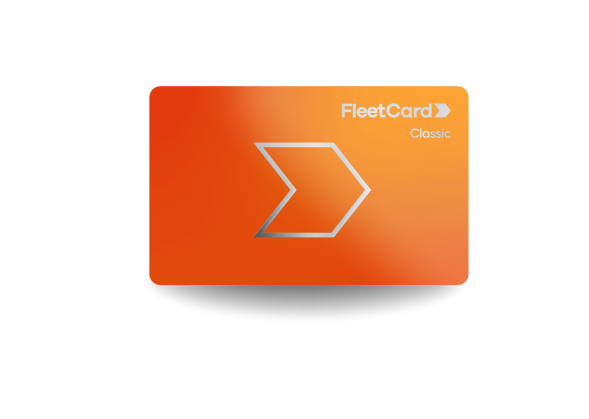
For tradies looking for a simpler setup, FleetCard Classic is a commonly used entry-level option.
Why network coverage matters most for tradies
Tradies don’t follow fixed routes. A day might cover multiple suburbs, an emergency callout, or a regional job.
A card with limited network coverage forces detours that cost both time and fuel, which eats into the value of any per-litre discount. FleetCard is accepted at over 95% of fuel stations across Australia, including Shell, Ampol, BP, 7-Eleven, United, Mobil, and regional independents.
For tradies working outside metro areas, coverage reliability tends to matter more than marginal per-litre savings.
Businesses managing vehicle uptime may also find optional services like fleet road assistance useful.
Spending controls: Keeping apprentices and employees accountable
Misuse tends to happen when controls are too loose. FleetCard lets tradies set fuel-only restrictions that block convenience purchases, apply daily or weekly spend limits, assign cards by driver or vehicle and receive real-time transaction alerts. Each card is tied to a person or a vehicle, which makes irregular spending easier to identify early.
Tradies expanding into electric vehicle management can find more information in the EV fleet solutions section.
Tax time: How a fuel card simplifies BAS and seductions
Fuel used for business is generally tax deductible, with GST claimable through BAS. The challenge is having documentation that’s complete and accurate.
A fuel card replaces individual receipts with a single monthly GST-itemised invoice. That total can be transferred directly into BAS reporting rather than pieced together from dozens of separate transactions. For businesses using Xero or MYOB, the integration removes manual entry entirely.
Eligibility: What tradies need to apply
To apply, tradies generally need an active ABN, a basic credit assessment and a minimum trading history that varies by provider. Approval is typically completed online, with cards arriving within a few business days once approved. Newer businesses may start with lower credit limits depending on their credit profile.
FleetCard for tradies: Why it fits the way you work
FleetCard is built for mobile, multi-site work where flexibility matters. It offers acceptance at 6,200+ (or 95%+) stations nationwide, up to 51 days interest-free, fuel-only spending controls per card, GST-itemised monthly invoicing, Xero and MYOB integration, and flexible options including FleetCard Classic.
For tradies comparing providers, the compare fuel cards page breaks down the differences clearly before you commit.
Common questions tradies ask:
Can sole traders get a fuel card?
Yes. Most providers accept sole traders with an active ABN.
Can I assign cards to different vehicles?
Yes. Cards can be issued per driver or vehicle.
What if a card is misused?
Fuel-only restrictions and real-time alerts help prevent and identify misuse.
Does a fuel card help at tax time?
Yes. It replaces individual receipts with a single GST-ready monthly invoice.
What happens if a card is lost?
It can be cancelled and replaced quickly through your online account.
Round up
For tradies, a fuel card is less about the per-litre discount and more about having proper visibility over one of your biggest ongoing costs. It keeps spending accountable, reduces end-of-year paperwork and aligns fuel expenses with how cash actually flows through a trade business.
To estimate your potential savings, start with the fuel savings calculator and compare your options before choosing the right setup.